
The toll in the case reached nine in Madhya Pradesh while media reports said of two infants died in Rajasthan.

India's pharmaceuticals and medical devices industries are still hopeful that trade negotiations with the US could cut a fairer deal for both sides, after President Donald Trump announced a 25 per cent tariff rate on India on a social networking platform without divulging the finer details.

'Our endeavour will be that we identify these products, put them in the public domain so that the manufacturers can look at them and give a boost to Make in India.'

A man in Delhi was critically injured after his wife allegedly poured boiling oil on him while he was sleeping. The incident occurred in their Madangir home, and the victim is currently in the ICU.

Tata Sons, now debt-free, has asked the RBI to drop its 'upper-layer NBFC' tag and allow it to stay private.
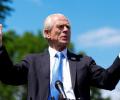
'Everybody in America loses because of what India is doing.'

'India did not surrender. That was why he wanted to pressurise India by this 25% tariffs.'

The Rajasthan government has suspended the state drug controller and halted the distribution of medicines manufactured by Kaysons Pharma following reports of children's deaths allegedly linked to contaminated cough syrup.

Two modules published by the NCERT, Swadeshi: Vocal for Local (for middle stage) and Swadeshi: For a Self-Reliant India (for secondary stage), carry excerpts from the prime minister's Independence Day address in which he stressed that self-reliance would drive India's journey towards a Viksit Bharat.

Russian President Vladimir Putin announced his upcoming visit to India in December and expressed his intention to address the trade imbalance between the two countries, particularly concerning India's crude oil imports from Russia. He also lauded India's independent stance on international issues and highlighted the strong relationship between the two nations.

'The outlook for the next Samvat is more constructive, as many of the earlier drags are gradually becoming supports.'
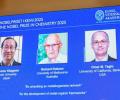
The Royal Swedish Academy of Sciences has awarded the 2025 Nobel Prize in Chemistry to Susumu Kitagawa, Richard Robson, and Omar M Yaghi for their pioneering work in the development of metal-organic frameworks (MOFs), Al Jazeera reported.

From labelling India the 'Tariff King' to slapping sweeping import duties, US President Donald Trump has steadily hardened his trade stance on India. These announcements are being seen as a pressure tactic to get New Delhi to agree to demands made by the US in the proposed Bilateral Trade Agreement (BTA).
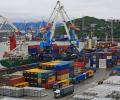
India's exports rose 6.7 per cent to $35.1 billion in August annually, while imports declined 10.12 per cent to $61.59 billion, according to government data released on Monday. Gold imports were down nearly 56 per cent in August, helping to trim merchandise trade deficit to $26.49 billion in August, as against $35.64 billion in the year-ago month.

Madhya Pradesh minister Narendra Shivaji Patel blames the Tamil Nadu government for the deaths of 20 children due to contaminated cough syrup, citing negligence in inspecting medicines. The Tamil Nadu government has banned the sale of the syrup and ordered its removal from the market. Congress leader Digvijaya Singh criticizes the food and drug department's administration.

Among Sensex shares, Sun Pharmaceutical, Tata Steel, Trent, Bajaj Finance, Mahindra & Mahindra, Bajaj Finserv, Reliance Industries, Axis Bank, Tech Mahindra, Adani Ports, Titan, BEL, and Larsen & Toubro were the major laggards. However, Hindustan Unilever, Maruti Suzuki India, ITC, Tata Consultancy Services and UltraTech Cement were the gainers.
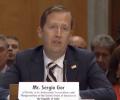
Gor underlined that President Trump has a "deep friendship" with Prime Minister Narendra Modi, and that is something that is unique.

US President Donald Trump's plan to sign an executive order to cut prescription drug prices by 30-80 per cent could lead to a global price adjustment with pharma firms pushing lower-cost countries like India to raise prices, according to the economic think tank GTRI. The US move could push prices in lower-cost countries like India as manufacturers would seek to recover losses and R&D costs from these nations.

Among Sensex shares, Adani Ports, Reliance Industries, Infosys, ICICI Bank, Eternal, BEL, HDFC Bank, Power Grid, ITC and Sun Pharmaceutical were the major laggards. However, Titan, Maruti, Trent, Bharti Airtel, Bajaj Finance, Tech Mahindra, State Bank of India, L&T, HCL Technologies and NTPC were among the gainers.
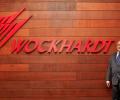
Mumbai-based pharma major Wockhardt, which is gearing up to launch its promising antibiotic candidate Zaynich soon, on Friday announced a shift in its United States (US) operations. The Indian pharma giant revealed that it has decided to exit the generics pharmaceutical segment in the country.

The Reserve Bank of India (RBI) on Wednesday met the long-standing demand of banks by allowing them to finance acquisitions by Indian companies, a move that also expands banks' capital market lending in the country.

From 12:01 am eastern daylight time on August 27, 2025, higher tariffs will apply to all products of India that are either entered for consumption in the United States or withdrawn from warehouses for consumption.
Dismissing allegations that Indian phacosrmaceutical companies copy products of Swiss firms, Commerce and Industry Minister Piyush Goyal on Tuesday said it is a long-standing myth and India respects intellectual property rights and never steals technology from others. He said that Swiss pharmaceutical companies have not shown even a single instance that Indian companies have illegally copied any of their trademarks or patents or copyrighted technology.

Recalling or relabelling medicines already in the supply chain before September 22 will not be mandatory, the finance ministry said on Tuesday, issuing a fresh set of frequently asked questions (FAQs) to address industry concerns following the announcement of goods and services tax (GST) revisions.
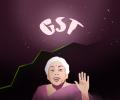
Lower rates effectively increase disposable income, strengthen purchasing capacity, and support broader consumption growth.
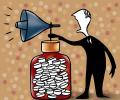
The Indian pharmaceutical industry is likely to benefit from a major wave of patent expiries in the US, as small-molecule drugs worth $63.7 billion are expected to go off-patent between 2025-29, a 65 per cent rise over the previous five years, according to a report by Antique stock broking limited.

Social media feeds and immigration forums lit up with questions from workers and families who feared they might be stranded abroad, unable to return to their jobs or reunite with loved ones.

'While the President has been critical of India, he has gone out of his way to compliment PM Modi. They have an incredible relationship.'

Prices for Indian consumers are expected to come down significantly from the current Rs 17,000-Rs 26,000 monthly.

'What we need to watch is how Saudi Arabia's financial assistance will be used by Pakistan. If the funds go to build their military hardware and operations, it should worry us.'
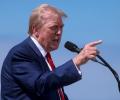
"I am telling you, these countries are calling us up, kissing my a***," Trump said during a speech at the National Republican Congressional Committee dinner on Tuesday.

As many as 13 firms, including Urban Company, which provides app-based beauty and home services, and Imagine Marketing, the parent of wearables brand boAt, have secured Sebi's approval to launch initial public offerings (IPOs), according to the regulator's update on Tuesday.

To shield against US President Donald Trump's tariff shock, analysts have been advising investors to focus on stocks of domestic-oriented companies, rather than export-centric ones, to minimise potential losses.

Among the Sensex firms, Sun Pharmaceuticals, Tech Mahindra, HCL Technologies, Infosys, Bajaj Finance, Eternal, Tata Consultancy Services, UltraTech Cement, Bajaj Finserv, Tata Steel, ITC and L&T were the major laggards. Asian Paints, Mahindra & Mahindra, BEL, Adani Ports, State Bank of India, Trent, HDFC Bank were among the gainers.

US Secretary of State Marco Rubio claims President Donald Trump was instrumental in bringing about the cessation of hostilities between India and Pakistan, a claim India has consistently denied.

India's goods exports rebounded in July after two months of contraction, with outbound shipments rising 7.3 per cent to $37.24 billion, led by a surge in exports to the United States before the country's reciprocal tariff kicked in and bolstered by a recovery in exports to other key markets.
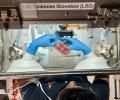
The $1.2 billion in-space manufacturing market is expected to grow and be worth more than $20 billion by 2033.

A Russian missile struck a warehouse belonging to an Indian pharmaceutical company, Kusum, in Ukraine, according to the Ukrainian embassy in India. The embassy alleged that Russia, despite claiming a "special friendship" with India, deliberately targeted Indian businesses in Ukraine. The strike reportedly destroyed medicines intended for children and the elderly. This incident follows a similar attack on a major pharmaceuticals warehouse in Kyiv, which was destroyed by Russian drones, as reported by the UK's ambassador to Ukraine. Kusum Healthcare, the company whose warehouse was hit, has a presence in 29 countries, including Ukraine. This attack comes amidst ongoing tensions in the region as Russia continues its offensive against Ukraine, despite US efforts to push for a ceasefire. Ukrainian Foreign Minister Andrii Sybiha accused Russia of being the sole obstacle to peace and claimed that Moscow rejected a US-brokered proposal for a ceasefire.

India's micro, small and medium enterprises (MSMEs) - which contribute over 45 per cent to outbound shipments - are facing a major disruption following the United States (US) decision to impose 50 per cent additional tariffs on the country's exports. MSME industry bodies have raised an alarm over the deep impact, seeking immediate government intervention.
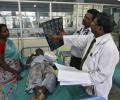
The rationalisation of goods and services tax (GST), announced on Wednesday, directly lowers the cost of everyday medical consumables, and also high-end therapies in oncology and rare diseases, helping reduce out-of-pocket patient expenditure and better adherence to medication.
